Slide, Mom! Slide!

As regular readers know, this blog software will only recognize one author for each article, either Robin or me. However, this post was coauthored  by me and our sons Burke and Ryan. The only way I can credit them is by this introductory statement. Thanks, guys!

—————-

Robin was on second base when the batter smacked a sharp line drive past the shortstop into left field. Off at the crack of the bat, she had clear sailing into third base. What she did not expect was the third base coach – her husband — windmilling his right arm signaling her to round third and head for home. She lowered her head and tried to pick up the pace. Unfortunately, speed was not in her skill set. Fortunately, she had a large storehouse of badassery.

The fielder snagged the ball in shallow left and in one step fired a bullet toward home. It was gonna be a close play! Ryan’s scream from the stands could be heard all over the field, “Slide, Mom! Slide!” The catcher straddled the plate and caught the perfect throw chest-high. Robin slid between the catcher’s feet – the only open path to the plate. Dust flying! The crowd of maybe 40 people roaring! Before the catcher could apply a tag, the umpire hollered, “Safe!” with arms outstretched, palms down.

Robin got up, dusted herself off smiling, and trotted to the bench. Later, she asked, “What were you thinking? You KNOW I can’t run!” I could only answer, “Well, I didn’t know the left fielder had that kind of an arm.”

One thing I did know is that Robin always threw herself into anything she tackled. BA in Economics. Phi Beta Kappa. Law Degree. High level manager in the energy industry. Courtroom lawyer. Talented dancer, pianist, and guitar player. Above all, a devoted Mom. But I am ahead of myself.

Most of her accomplishments were against the odds. Take that slide into home during a Houston City League softball game. She had never done that before, but it did not stop her trying and succeeding. In softball, runners cannot leave the base until the ball is hit. They cannot take a nice extended lead. A runner on second is NOT guaranteed to score on a single to the outfield. At five foot two and forty-two years old, Robin was probably the shortest and oldest infielder in the league. The catcher stood about five foot ten and weighed one eighty. There was no way Robin could go through that woman, so she slid under her. The catcher may have been bigger and quicker, but Robin was older and cagier – and more determined. There was only one way to make that play work, and Robin found it. Sorta characteristic of her life: faced with an obstacle, Robin usually found a way.

As a kid in Shreveport, Louisiana, she was always athletic. Climbing trees. Playing tag. To her parents’ credit, they encouraged this active behavior. They sent her to a summer camp where she excelled at all types of activities. Camp Fern in Marshall, Texas, was on a small lake where girls learned swimming, canoeing, and water skiing. There was always an element of competition both individually and against the other tribe. They also competed in horseback riding, riflery,  and archery. Robin was never the biggest or the fastest but became a leader of one tribe. When she outgrew being a camper, she became a counselor’s aide and then a counselor. She was an instructor in water skiing and riflery – the first female counselor to drive the ski boat and run the rifle range. Over ten summers, Robin was challenged physically and recognized in competition against her peers.

As a student at The University of Oklahoma, she majored in Economics. She was an academic standout and an officer of her sorority. She landed the lead dance and singing role in a major student stage production.
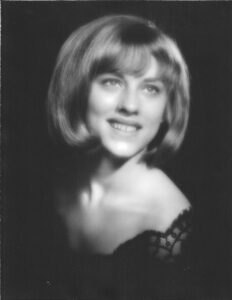
Robin’s Sorority Portrait

A neighboring fraternity recognized her academic prowess and asked her help tutoring its members through a Statistics course. Stat was known as one of the flunk-out courses in the Business Department. Every one of her eight ”students” passed!

She left college before completing her degree to marry the luckiest man in the world and to start a family. Nevertheless,  she resolved she was going to complete her education – somewhere – sometime. It didn’t take long. Three years later she graduated with honors from OU. She could not immediately put her degree to work because she was tied to the itinerant lifestyle of a military wife.

She created other outlets in lieu of gainful employment. She painted. She wrote poetry. She doted on her two sons. She spearheaded a crisis intervention Help Line. In her spare time, she wrote a subversive column for “Listen Ladies,” the Officers Wives Club newsletter. The column was unabashedly feminist, a radical position on a military base in the early 1970s. Importantly, she wrote well, with precision, with explicit expression, and with no wasted words. She is the only person I have ever met who can edit their own writing. This talent would not be wasted.

In 1973, her family became unshackled from the military, and she sought professional employment where she could put her Economics degree to work. Three questions common to her interviews loomed as obstacles, only one of which seemed legitimate. “Do you speak any computer language?” Fair enough. She did not, so she immediately enrolled in a Fortran class. “How many words per minute do you type?” Pardon me? I have an Econ degree. I am not applying for a secretarial position. And, finally, “What will you do with your children?” She wanted to say she would put them up for adoption, of course. What’s the answer to that question anyway? Love them? Cherish them? Help them reach their goals?

Several months later, the Equal Employment Opportunity Commission announced an audit of a company that had declined to hire her. The company’s highest-ranking female at the time was an Executive Secretary. The company needed immediate progress in hiring females and minorities to avoid large fines. It scrambled through its files and found this previously rejected woman.

“Are you still interested in employment?” “Yes,” she answered, “and I now speak Fortran.” She was hired on the spot as an Analyst in the Economics and Planning Department.

Her second day on the job, she learned that the department taught Fortran to all incoming employees who were not computer literate. So much for that first interview question being a legitimate obstacle.

During her second month, the department hired a male college grad with no experience at twice her salary. The handwriting about sexist discrimination was chiseled into the wall, but she did not give up.

Her boss quickly recognized her intelligence, analytical skills and writing talents. He drafted her into a fledgling mergers and acquisitions group tasked with recommending steps to diversify this stodgy old pipeline company. Her efforts steered the company into some profitable ventures and away from risky ones. She graduated from analyzing and preparing material for executive review into presenting those materials to the board of directors. Her expertise grew to encompass the whole enterprise. She led the creation of an annual strategic plan for the company with periodic updates during the year.

All the while, she was a wonderful wife and mother, raising and nurturing two wonderful sons. To hear her tell it now, she regrets the long hours and some weekend work wishing she had spent more time with her boys. But if you ask them, they will tell you about her attendance at early Saturday morning soccer games in the dead of winter. They’ll mention her love of baseball and family tickets to Astros games. Annual summer vacations to The Other Place on the Comal River, including the time spent in a rickety cabin she christened “The Pit” during a thunderstorm. Drives around the Hill Country searching for “Mom’s Eats” or the best café the small towns offered. Finding Luckenbach and the Grist Mill at Gruene and Naeglin’s Bakery in New Braunfels.
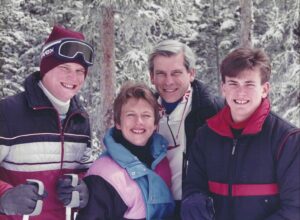
Burke, Robin, Gary, and Ryan in Colorado

Ski trips to Colorado. Vacations to Cozumel. Singing and playing the guitar at night to put both boys to sleep when they were toddlers. Playing piano accompaniment for Burke’s saxophone solo at University Interscholastic League competitions. Listening to old 45 rpm records with Ryan when he was interested in learning the guitar. And later, the midnight trips to Houston after attending his band’s performance at Hole in the Wall or other Austin venues. She helped make life an adventure for everyone around her. And her boys loved it.
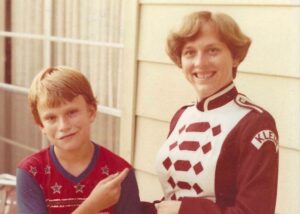
Robin in Burke’s Band Uniform

Her career took a turn when the executive she had worked with for years departed the pipeline company and joined an independent oil and gas producer. The opportunity was there for the pipeline company to promote her into a higher role, but they blew it. Instead of promoting her, they asked her to assume an expanded role, but with no title or additional pay. As I said, the gender discrimination ran deep. Within a couple of months, her old boss called with an offer at the oil and gas company. She considered it for a while and accepted.

Her new company had no planning systems despite being deeply involved in overseas and domestic exploration and production. Her new job was to create that function from scratch, and then convince a bunch of crusty oil patch guys to buy into the program. She successfully developed systems that helped the company make good decisions. After seven years, she had had enough. One deciding factor? Again, gender discrimination. She observed to her boss that she performed functions and had responsibility equal to two male employees who were titled vice presidents. Her title? Director, a notch below vice president and one that existed nowhere else in the company. She suggested they should all have equal rank. The response of the company — you probably guessed — they demoted the two officers to directors!

She soon resigned and entered law school, fulfilling a dream from her earliest days in college. Before classes began, the law school informed her she had been granted a scholarship for which she had not even applied. Her first summer, she walked into the Houston office of the American Civil Liberties Union and asked if she could help. They immediately put her to (unpaid) work researching First Amendment issues related to an existing case. The next semester, the ACLU recognized her as volunteer of the year with a cash stipend. Law school was a great fit. She made Law Review, graduated with honors, and went to work for a respected firm as “the world’s oldest living associate,” as she laughingly said.

She became a civil litigator, standing up in court, thinking on her feet, and trying to find justice for her clients. After several years, the law firm dissolved as partners spun out into boutique firms or private practice. She followed suit and ran her own business until retiring.
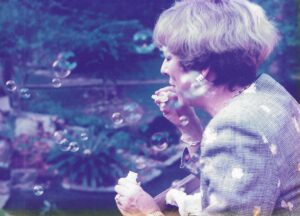
Robin Rankin Willis

Meanwhile, Burke’s wife was accepted to medical school. The couple planned to move their family south of Houston, a shorter drive to the Med Center. Without a moment’s delay, Robin said we needed to move into the same neighborhood to help with their three school-age children. Robin met the grandchildren at 6:30 each the morning when their mother dropped them at the bus stop and waited with them until the school bus arrived. She then took care of her law clients until meeting the school bus in the afternoon.

Robin loves gardening and genealogy. After retirement, she directed more energy toward those hobbies with a lush vegetable garden in the back yard and frequent road trips to county courthouses and archives in search of “dead relatives.” At the age of 66, she mentioned we had never been to the Houston Boat Show. A few days later we took delivery of a 17-foot tandem kayak. She also won a raffle for a thousand-dollar shopping spree for fishing gear. Our kayak soon had a trolling motor and a fish finder. We had fun exploring local lakes, rivers, and salt water fishing near San Luis Pass.

As age crept up on us, our retirement morphed. Most of our friends are now those from church rather than business associates. A swimming pool replaced the garden in a nod to our creaky knees. For similar reasons, the kayak gave way to a bigger boat. The genealogical road trips have decreased in number as more original documents became available online. And we have explored more foreign cities, Paris being our favorite. A dozen years later, she has survived ovarian cancer and is recovering from hip replacement surgery. Slide, Mom! Slide! We look forward to more fishing trips before selling the boat and moving to Austin to be closer to our boys. It is sure to be another adventure regardless of the obstacles.

Thank you, Robin Rankin Willis, the love of my life, my best friend, my wife, and my hero.
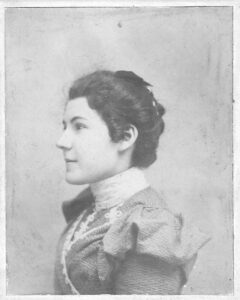
Field of Dreams – Dr. Henry Noble Willis – Part II

When we left Dr. Willis in 1899  in a Field of Dreams Part I, he had just remarried after the untimely death of his first wife Mary E. McMaster. Their two children were Mary Catherine, age eight, and Harry McMaster, age six, when Dr. Willis remarried. Jessie Sensor, his new wife, was only eighteen, a very young stepmother for these two! She was the daughter of The Reverend George Guyer Senser and Julia Frances Mendenhall.[1]

Jessie Sensor Willis

During the year between his wife’s death and his remarriage, surely family or friends helped Henry care for the children. The kids lived at Henry’s home on Second Street. Their maternal grandmother, Elizabeth Grace McMaster, lived close by in Pocomoke City on Market Street between First and Second.  Henry also had a live-in cook in the household, Annie Marshall. Regardless, the trauma of losing Mary had to have been extremely painful for Henry and their children.

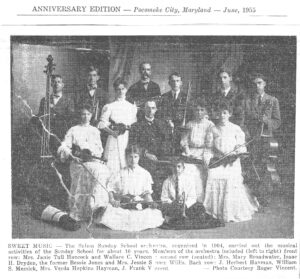
Jessie joined the family and settled into the Willis home on Second Street. They lived there for another nine years. The 1900 census lists the four Willis family members and Annie.[2] The Willises began attending church at the Salem Methodist Church at 500 Second Street Jessie’s father preached there on a rotating basis. Jessie was active in the church, as she had been throughout her life. She played the violin in the Salem Sunday School Orchestra.

A photo of the group published in the local paper shows her seated at the far right. According to the paper, the ensemble organized in 1904 and played for about ten years.[3] Henry and Jessie’s first child was also born in 1904, a daughter they named Grace after Jessie’s younger sister.
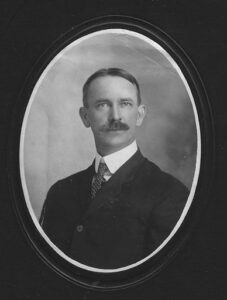
In 1908, the family moved to Wilmington, Delaware. Records do not indicate why the family relocated. Dr. Willis seemed to be doing well in Pocomoke City. He had served one term as a commissioner of the Orphan’s Court in Worcester.[4] He and Jessie owned their home and an office building. Initially, the children’s grandparents were close by. Elizabeth McMaster lived in town and the Sensors were only 20 miles distant. That support system disappeared when Elizabeth McMaster died, and several years later the Methodist Church reassigned George Sensor to churches in New Jersey.[5] Maybe the lure of the larger city enticed Jessie and Henry to move. Moving closer to Jessie’s parents may also have been a factor. Wilmington is about 35 miles from Camden and Wenonah, New Jersey, where Reverend Sensor was newly assigned. The extended family took another hit, however, when Rev. Sensor died in 1913. Whatever the reasoning at the time, Henry and Jessie sold their home in Pocomoke and moved.[6]

Financial Mystery

Dr. Henry Noble Willis

The family’s financial situation is a mystery. Henry inherited several hundreddollars from his father’s and grandfather’s estates.[7]He purchased property on Second Street in Pocomoke City for $350 in 1890. He and Jessie sold it for $2,100. That would have been a nice profit except that it was mortgaged for $1,500. The net cash to the family was only $600 less any fees. Henry and Jessie did not have enough money to buy a house in Wilmington, so they rented.

It appears that Dr. Willis had been increasingly in debt in Worcester County. Deed records show that only months after purchasing the home in Pocomoke, he borrowed money against it. Further, he refinanced the debt in larger amounts over the years.[8] When his first wife inherited an interest in property from her father, they mortgaged that as well, even before they owned part of it outright. They refinanced that property several times at increasing amounts.[9] There is no record of how Henry used the borrowed money. Did he try to start a drug store, as suggested by his purchase of soda fountain equipment? One mortgage of the office building that was part of the inherited McMaster property indicated it was occupied by, and presumably rented to, a fish and oyster dealer.[10]There should have been some income from that rental. Interestingly, deed records do not show Henry and Jessie ever selling the McMaster property. Was it repossessed for nonpayment of debt? Whatever the actual state of their finances, Henry and Jessie never bought a home in Wilmington. They lived in rented houses for the rest of their lives.

Wilmington

Dr. Willis worked as a general practitioner in Wilmington. He received specialist training in eye, ear, nose and throat diseases and was for several years the city vaccine physician for the southeastern district. Jessie worked as a secretary and pastor’s assistant at Harrison Street Methodist Church a short distance from their home(s). She became Superintendent of the Beginners Department of the Church School and staged many religious productions by the church youth. We can assume her income helped maintain the household. Family legend states that Dr. Willis sometimes took payment in kind from his patients, e.g., a chicken or two instead of currency.

Henry’s mother, Emily R. Willis moved to Wilmington from Preston by at least 1909 and lived with her son’s family until her death in 1921.[11] Emily apparently took good care of her money and probably helped with household expenses. Her personal property estate in 1921 amounted to almost $6,500, all in bank deposits or a secured loan. Henry and his sister Mary each inherited about $2,700 after expenses.[12]

Tragically, the couple’s daughter Grace died of meningitis at the age of five in 1909.[13] Henry and Jessie soon adopted a child about the same age, Katheryn, whom everyone called Kitty. In 1916, Jessie gave birth to a son, Noble Sensor Willis, who was a full generation younger than his half-sister Mary. Mary was still listed in the household in the 1920 Federal Census at age 28 and worked  as a secretary.[14]

Mary Catherine Willis

Mary Willis never married. She worked most of her life for the YWCA.  In 1916, she attended a reunion of The McMaster Clan in America, in Ashbury Park, New Jersey. Her uncle John S. McMaster organized this national group after extensive research on the family’s Scottish roots.[15] The McMaster Clan elected her Foreign Secretary in 1920.

Mary C. and Harry M. Willis at McMaster Clan Reunion

At the time, she was headed for Peking, China, as a secretary for The Language School, a missionary group sponsored by the YWCA. Her 1920 passport covered visits to Hong Kong, China and Japan.[16] A McMaster family history book lists both Mary and Harry with a permanent address in Wilmington, Delaware.[17] Mary returned from China to the United States before WWII broke out and continued working for the YWCA. She retired in St. Petersburg, Florida, where she died 29 Sep 1966. Mary is buried in the family plot at Silverbrook Cemetery, Wilmington, Delaware.[18]

Harry McMaster Willis

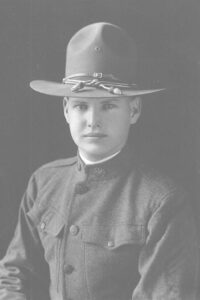
Harry Willis left Wilmington in 1917 to join the Aviation Section of the Signal Corps, the precursor organization of the Army Air Corps.[19] He was a sergeant stationed in Wichita Falls, Texas, in 1918 when he married Margaret Allmond, a native of Wilmington.[20]  She was the daughter of Dr. Charles M. and Emma Allmond. We can easily speculate that the doctors Willis and Allmond knew each other.

Harry McMaster Willis

Harry and Margaret were married in Wichita Falls rather than Wilmington. Dr. Allmond accompanied his daughter on probably a two-day train trip from Wilmington to Wichita Falls for the wedding.[21] After being discharged from the service, Harry and Margaret moved back to Wilmington where he became an insurance agent. His listing with the McMaster Clan in 1920 showed him serving with 198th Aero Squadron, but with an address in Wilmington.[22]

Harry and Margaret raised two daughters, Margaret and Emma May, who married two Larson brothers. The young women were wed several years apart in the home of their grandparents, Dr. and Mrs. Allmond, by the pastor at Second Baptist Church. Harry’s wife Margaret died in 1967. Harry subsequently married Virginia Baker Borton, widow of Everett E. Borton. Harry died in Wilmington in 1974 and Virginia in 1981.

Part III

While his elder children were becoming independent, Dr. Willis’s health began to fail. He died of heart disease 11 April 1926.[23]Widow Jessie was left to raise eleven year old Noble Sensor Willis with only her income from working at the church. How she did that will have to wait for the third part of this family story.

One hint about what is to come — Harry’s stint with the Air Corps in World War I likely influenced the direction his young half-brother, Noble, took before World War II. Noble graduated from Duke University into the teeth of the depression in 1939. Unable to find a job that would use his new college degree, he enlisted in the Air Corps. Did Harry’s prior service have anything to do with that decision? We do not know, but it seems logical that it would. More to come.

______

A summary descendancy chart will help picture this family –

Henry Noble Willis (1865 – 1926)

                  Married 1st Mary E. McMaster (1867 – 1898)

                  Children:

                                    Mary Catherine Willis  (1891 – 1966)

                                    Harry McMaster Willis (1893 – 1974)

                                                      Married 1st Margaret Lobdell Allmond (1896 – 1967)

                                                      Married 2nd Virginia Baker Borton (         – 1981)

                  Married 2nd Jessie Sensor (1881 – 1937)

                  Children:

                                    Grace Willis (1904 – 1909)

                                    Katheryn Willis (1905 – 1972)

                                    Noble Sensor Willis (1916 – 1969)

[1] Several sources online give Jessie Sensor and her sister Grace the middle name Mendenhall, but I have found no evidence supporting either. In fact, some census records show their brothers with middle names or initials but not the two girls.

[2] 1900 Federal Census for Worcester Co., MD,  Pocomoke City, page 23B, Second Street, dwelling # 80:

Dr. Henry N. Willis, 34, b Dec 1865, married 1 year, b MD; Jessie S. Willis, 19, b Jan 1881, married 1 year, b NEB; Mary C. Willis, 8, b Jul 1891, MD; Harry M. Willis, 6, b Jul 1893, MD; Annie Marshall, cook, 32, b 1868 VA

[3] The photo appeared in the 1955 Anniversary Edition of the local newspaper, the “Worcester Democrat,” copy of the clipping in possession of the author.

[4] Obituary newspaper clipping in possession of the author.

[5] Elizabeth Grace McMaster died in 1903 per tombstone on Find-A-Grave

[6] Worcester County Deed Book OCD 2:29 – 26 Jun 1908, Henry N. and Jessie S. Willis sell the Home Lot for $2,100

[7] Caroline County Deed Book ECF 61:369, 7 Dec 1894 – James S. Willis purchased lands of Zachariah Willis from his siblings or their heirs for $200 each. With sibling Henry F Willis deceased, his widow Emily R. Willis and children Mary W. Clark and Henry N. Willis shared the proceeds. Emily was apparently living with her daughter; both their signatures were notarized on the same document in Sussex County, Delaware.

[8] Worcester County Deed Book entries related to the Home Lot – FHP 1:116 – Henry N. Willis purchases for $350 in Sep 1890; FHP 1:275 – borrowed $500 in January 1891; FHP 1:310 – borrowed another $500 in February 1891; FHP 5:403 – borrowed $1,400 in October 1894 to refinance, netted $400; FHP 6:482 – borrowed $1,500 in July 1895 to refinance, netted $100.

[9] Worcester County Deed Book entries related to the Office Lot – FHP 1:202 – Elizabeth Grace McMaster gifts property to her four children in Dec 1890; FHP 3:535 – borrowed $600 secured by ¼ undivided interest in March 1893; FHP 4:524 – siblings gift the Office Lot to Mary E. Willis in December 1893; FHP 5:320 – borrowed $1,500 in July 1894 to refinance, netted $900; FHP 9:116 – borrowed $1,800 in Feb 1897 to refinance, netted $300.

[10] Worchester County Deed Book FHP 12:239 – 13 May 1899, Henry Willis borrowed $80 to be repaid at the rate of $20 every three months secured by the office building occupied by James W. Bonnefield [sic Bonneville] who appears in the 1900 census as a fish and oyster dealer.

[11] The 1909 City Directory for Wilmington lists the members of the household at 320 S. Heald Street as Henry N. Willis, Jessie S. Willis, Mary C. Willis, Harry W [sic M] Willis, and Emily R. Willis. It does not show a separate business address for Dr. Willis indicating he may have been seeing patients in his home. The 1910 Federal Census shows the same residents but lists the address as 315 S. Heald.

[12] Orphan’s Court of Caroline County, Maryland, Probate Records of the Estate of Emily P. Willis, died 13 Feb 1921, total personal property $6,452.41, net after expenses $5,407.52, distributed to each Henry N. Willis and Mary W. Clark $2,703.76.

[13] Return of a Death in the City of Wilmington, Grace Willis, 11 May 1909, Meningitis, born MD, Heald and New Castle Street.

[14] 1920 Federal Census for Wilmington shows the household at 703 West Tenth Street; Henry N. Willis, 54, physician; Jessie S, 38; Mary C., 28, secretary YWCA; Catherine [sic, Katheryn], 18; Noble, 3½; Emily P. 86.

[15] McMaster, Fitz Hugh, The History of the MacMaster-McMaster Family, The State Company, Columbia, South Carolina, 1926, 43.

[16] Passport application

[17] McMaster, 106.  Miss Mary Clarke [sic Catherine] Willis, 919 Adams Street, Wilmington, Del. Born July 9, 1891, Pocomoke City, Md.; niece of John S. McMaster. The listing incorrectly states her middle name as Clarke rather than Catherine.

[18] Silverbrook Cemetery Records, Wilmington, Delaware, p 234 – Old Book; Lot #4 1/2, Section M, Deed # 418, Burial 16350, Grave 6, Mary C. Willis, 75 yrs., 10/4/66

[19] Delaware World War I Servicemen’s Records, 1917-1919, on Ancestry, Harry McMaster Willis, age 24, service date 8 Nov 1917.

[20] Wilmington Morning News 11 Oct 1918, page 12, at Newspapers.com. Sergeant Harry M. Willis married Margaret Lobdell Allmond on 30 Sep 1918 in Wichita Falls, Texas

[21] Undated newspaper clipping on Ancestry. Likely, Wilmington Morning News, Sunday, 29 Sep 1918. Also, the 1909 Wilmington City Directory lists Charles  M. Allmond physician and druggist at 627 Market with a home at 914 West Street. Margaret L.  Allmond is not listed in the directory. She is listed as 14 years old in the 1910 Federal Census.

[22] McMaster, 107.  Harry McMaster Willis, 919 Adams Street, Wilmington, Del. Born July 27 1893 at Pocomoke City, Md.; nephew of John S. McMaster; member of 198th Aero Squadron.

[23] State of Delaware Death Certificate No. 1274, HN Willis, MD, 11 April 1926 at 7 a.m., 1215 W. 9th Street, Wilmington, Del. Cause of death myocarditis